

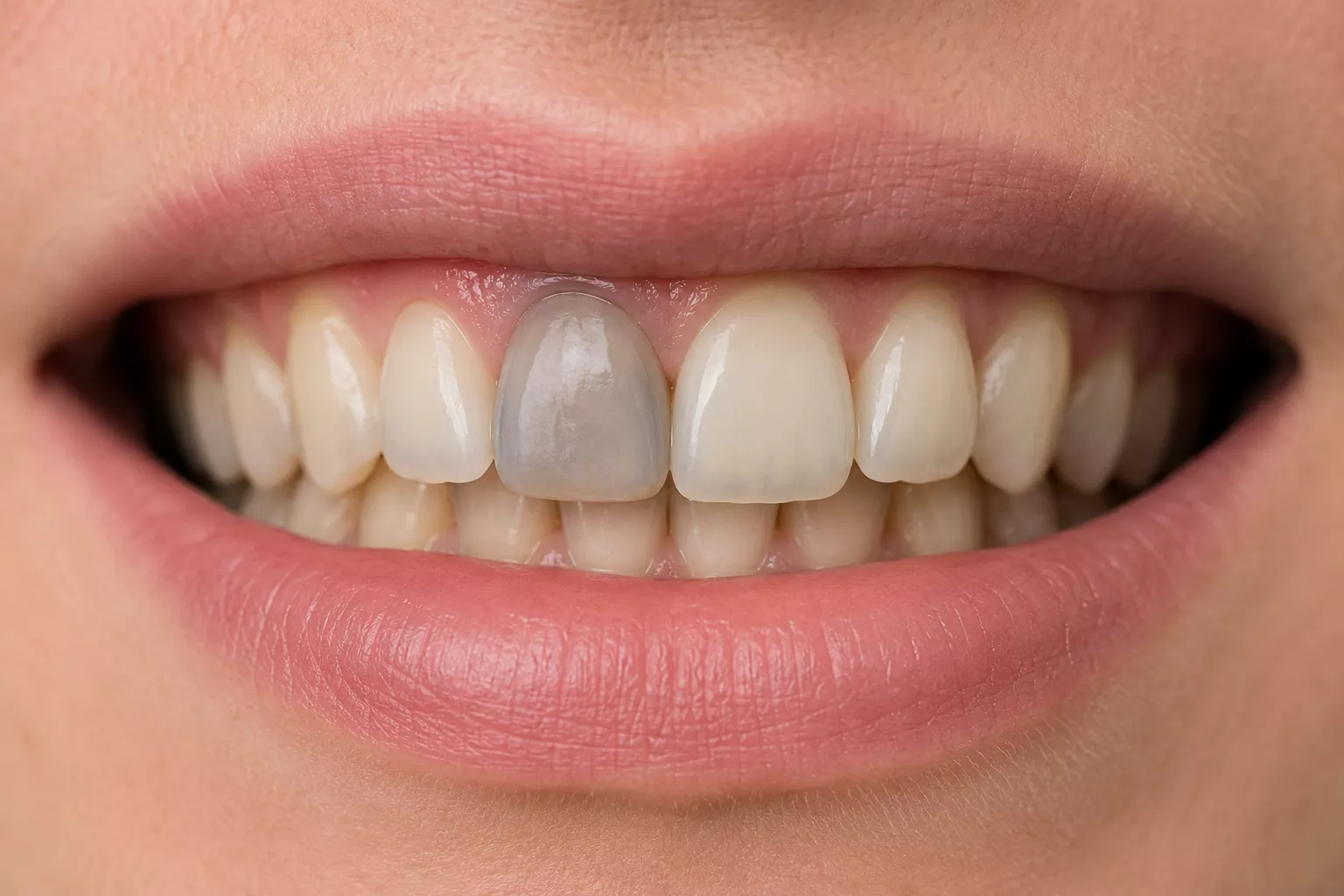

Grey teeth can be unsettling, especially when the colour change affects a front tooth or appears suddenly. While many people expect teeth to become yellow over time, grey discolouration often feels more unusual and can sometimes point to a deeper dental issue.
In some cases, grey teeth are caused by staining inside the tooth. In others, the problem may be linked to trauma, nerve damage, ageing dental work, enamel thinning or natural tooth colour. Sometimes only one tooth is affected, while in other cases several teeth may appear dull or grey under certain lighting.
The right treatment depends entirely on the cause. Some cases can be improved with whitening or cosmetic dentistry, while others need restorative treatment to protect the tooth itself.
What causes grey teeth?
Grey teeth can develop for several reasons. Some causes affect the outer enamel, while others involve changes inside the tooth.
The exact shade can also vary. Some teeth look slightly dull or translucent, while others become dark grey or bluish over time. This difference matters because surface stains are treated differently from internal discolouration.
Tooth trauma and nerve damage
One of the most common reasons for a single grey tooth is trauma. If a tooth has been hit, cracked or injured, the blood supply inside the tooth can become damaged. Over time, this may cause the tooth to darken.
The colour change may appear soon after the injury, but it can also happen months or years later. This is why some people notice one front tooth slowly becoming grey even though they do not remember a recent accident.
A grey tooth after trauma does not always mean the tooth is dead, but it can indicate that the nerve inside the tooth has been affected. This should be checked by a dentist, especially if the tooth is painful or becoming darker.
Ageing and enamel thinning
As enamel becomes thinner with age, the layer underneath the enamel becomes more visible. This inner layer, called dentin, is naturally darker than enamel. In some people, this creates a yellow appearance, while in others the teeth may look dull, grey or slightly translucent.
This can be more noticeable near the edges of the teeth or in certain lighting. It does not always mean the teeth are unhealthy, but it can affect the overall brightness of the smile.
Old fillings and dental work
Older dental work can also make a tooth look grey. Large metal fillings, especially older amalgam fillings, may darken the surrounding tooth structure over time. This can give the tooth a shadowed or grey appearance.
Teeth that have had root canal treatment may also become darker because of changes inside the tooth. In these cases, normal whitening may not work as well because the discolouration is internal rather than on the surface.
Smoking and staining
Smoking is more commonly linked with yellow or brown staining, but long-term tobacco use can also make teeth look dull or grey. This is especially likely when staining is combined with tartar build-up, enamel wear or gum recession.
Because tobacco stains can become deeply embedded over time, professional cleaning or whitening may be needed before the colour improves noticeably.
Genetics and natural tooth colour
Some people naturally have teeth that look less bright or slightly grey-toned. Tooth colour is influenced by enamel thickness, dentin colour and genetics.
This is not necessarily a sign of poor oral health. Some healthy teeth simply have a more ivory, grey or translucent appearance than others.
Certain medications
Some medications can affect tooth colour, especially if they are taken while teeth are still developing. Tetracycline antibiotics are one of the best-known examples and may cause grey, brown or bluish staining.
This type of discolouration develops inside the tooth, which means it is usually harder to treat with standard whitening alone.
Why is only one tooth grey?
If only one tooth has turned grey, trauma or nerve damage is more likely. This is especially true if the tooth has been hit in the past, even if the injury happened years ago.
A single grey tooth may also be linked to previous root canal treatment, a large filling, internal staining or decay. Because the cause may be inside the tooth, it is worth getting it checked rather than trying whitening products first.
Can a grey tooth become white again?
Sometimes, yes. But the result depends on why the tooth became grey.
If the grey appearance is mainly caused by surface staining, professional cleaning or whitening may help. If the discolouration is internal, the dentist may need to consider other options such as internal bleaching, composite bonding, veneers or a crown.
This is why diagnosis matters. A treatment that works well for general staining may do very little for a tooth that has changed colour because of trauma or internal damage.
Are grey teeth unhealthy?
Not always. Some grey teeth are mainly cosmetic and remain stable for years. Natural tooth colour, enamel translucency and mild staining can all make teeth look grey without indicating a serious problem.
However, grey discolouration can also be a warning sign. If the tooth is painful, sensitive, loose, swollen or getting darker, it may suggest nerve damage, decay or another internal issue.
How dentists treat grey teeth
Treatment depends on whether the discolouration is external or internal.
Professional whitening may help when the grey appearance is caused by surface staining or general dullness. However, whitening is often less effective for deep grey staining than it is for yellow staining.
For root canal-treated teeth, internal bleaching may be considered. This involves placing whitening material inside the tooth and is only suitable in specific cases.
Composite bonding can be used when whitening does not give enough improvement. A tooth-coloured resin is applied to cover the discolouration and improve the shape or brightness of the tooth.
Veneers may be recommended when the patient wants a more significant cosmetic improvement, especially if several front teeth are affected. If the tooth is structurally weak or heavily restored, a crown may be a better option because it can improve appearance while also protecting the tooth.
Why do my teeth look grey in certain lighting?
Lighting can change the way teeth appear. Cool lighting, phone cameras and fluorescent light can make teeth look greyer than they do in natural daylight.
This effect is more noticeable when enamel is thin, translucent or uneven in colour. It can also happen after whitening if some teeth respond differently from others.
Can whitening make grey teeth worse?
Whitening does not usually damage grey teeth when done properly, but it can sometimes make the colour difference more noticeable.
If one tooth is grey because of internal staining, whitening may lighten the surrounding teeth while the grey tooth stays darker. This can increase contrast and make the affected tooth stand out more.
For this reason, it is better to have grey discolouration assessed before starting whitening treatment.
When should you see a dentist?
You should book a dental check-up if:
- one tooth has suddenly become grey
- the tooth was previously injured
- there is pain, sensitivity, swelling or looseness
- the colour is becoming darker
- whitening products are not helping
A dentist can determine whether the issue is cosmetic or whether the tooth has been damaged internally.
Common questions about grey teeth
Why is one of my teeth turning grey?
A single grey tooth is often linked to trauma, nerve damage, internal staining or previous dental treatment.
Are grey teeth dead?
Not always. However, grey discolouration can sometimes suggest that the nerve inside the tooth has been damaged.
Can whitening fix grey teeth?
Sometimes, but deep internal staining may need internal bleaching, bonding, veneers or crowns instead.
Is a grey tooth an emergency?
Not always, but it should be checked if the change is sudden, painful or associated with swelling.
Why do my teeth look grey in photos?
Lighting, camera settings, enamel translucency and tooth wear can make teeth appear greyer in photos than they do in natural daylight.